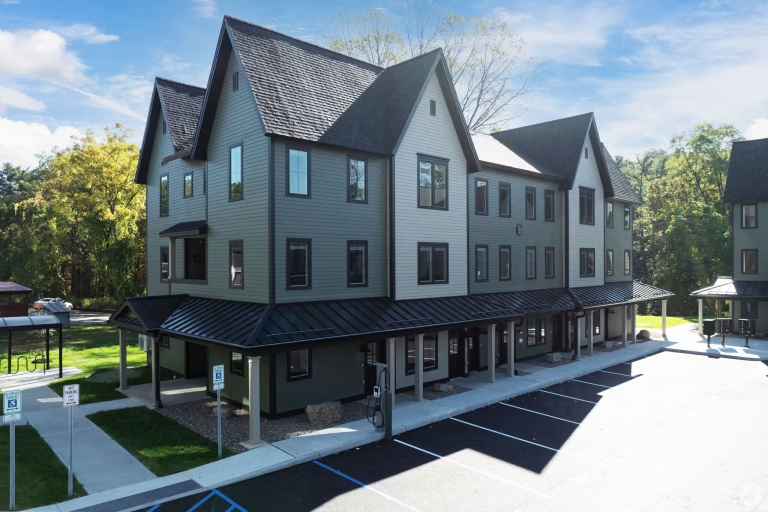
HUD 223(f) Refinance: How The Ridge Apartments Is Moving From Construction to Permanent Financing
As I mentioned in our monthly presentation, our sister company—Ascend Real Estate Advisors LLC—is shopping the refinance for The Ridge Apartments. Here’s a closer look at how that process works: shopping lenders, underwriting the new loan, and closing—the part investors care about most.
From Construction Debt to Permanent Financing
Once a property is built, leased up, and generating stable cash flow, the smart move is to replace construction debt with permanent financing built for the long haul—typically offering lower rates, longer terms, and structures better suited to an operating asset. The Ridge has reached that milestone. Leasing has stabilized, operations are running smoothly, and the property is now well-positioned for this next phase of its capital structure. Not all lenders are created equal, which is why we lean on Ascend’s expertise to find the right multifamily lending partner.
Agency vs. Conventional Bank Financing: Weighing the Options
There are two long-term financing products that fit The Ridge: agency debt and conventional bank debt. We like agency debt for its non-recourse structure and conventional debt for the flexibility of its terms.
Agency financing, offered through Fannie Mae or Freddie Mac programs, is the traditional go-to for multifamily permanent loans. It’s known for competitive pricing and, notably, non-recourse terms—meaning the loan is secured by the property itself rather than backed by personal guarantees from the sponsors.
Conventional bank financing offers more flexibility and a faster, more relationship-driven process, but banks have historically required some form of recourse or personal guarantee as part of the deal.
Why We Chose HUD’s 223(f) Program for The Ridge’s Refinance
After weighing agency and conventional bank debt, we landed on HUD’s 223(f) loan program as the best fit for The Ridge. HUD offers a fully amortizing 35-year term and up to 80% loan-to-value (LTV)—compared to our other quotes, which topped out around a 5–10 year term, 30-year amortization, and 75% LTV.
Here’s why that matters: a longer, fully amortizing term locks in today’s financing for decades rather than forcing a refinance every 5–10 years, while higher leverage returns more capital to investors at closing. HUD 223(f) is a non-recourse, government-backed structure that trades a longer approval process for materially better long-term economics on The Ridge. It’s the ideal debt product for a long-term hold, and it’s also assumable—an attractive feature if we ever looked to sell.
What This Multifamily Refinance Means Going Forward
Refinancing out of construction debt is a milestone worth marking. It signals that a project has moved past its highest-risk phase and into stable, income-producing operation. For The Ridge, it also means a more efficient capital structure: lower carrying costs, a longer runway before the next refinancing decision, and reduced risk exposure for our sponsors and investors alike.
We’ll share updates as the transaction moves toward closing. In the meantime, this is a good moment to recognize the work that got The Ridge here: a well-executed lease-up, disciplined operations, and a lending relationship that gives us leverage to negotiate terms most sponsors don’t get to see.
Huge thanks to CG Construction for the exceptional work up until now—the team is already busy in Valatie at our next project.
More to come as we approach closing in Q3.
Frequently Asked Questions
What is a HUD 223(f) loan? HUD’s 223(f) program is a government-backed, non-recourse permanent financing option for stabilized multifamily properties, offering fully amortizing terms up to 35 years and loan-to-value up to 80%.
How is HUD 223(f) different from agency financing? Both HUD 223(f) and agency loans (Fannie Mae/Freddie Mac) are non-recourse, but HUD 223(f) typically offers longer amortization and higher leverage in exchange for a longer approval timeline.
Is a HUD 223(f) loan assumable? Yes. HUD 223(f) loans are assumable, which can be an advantage for sponsors who may want to sell the property in the future without disrupting existing debt.