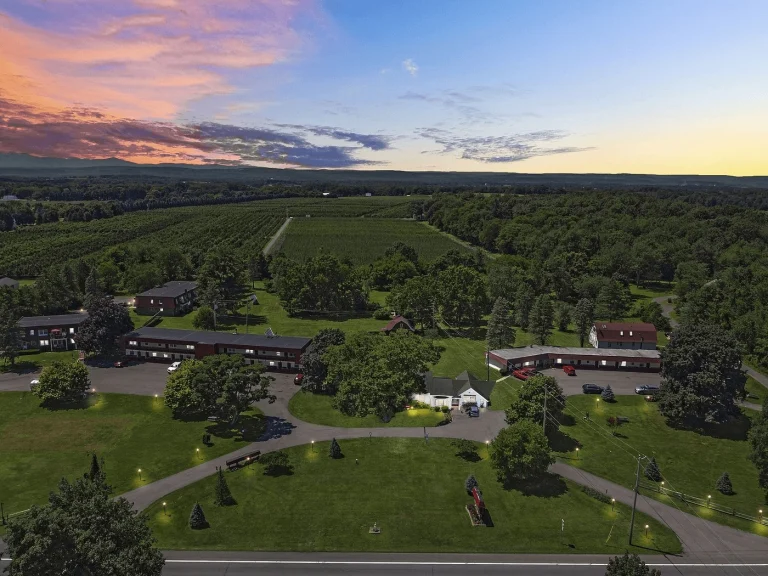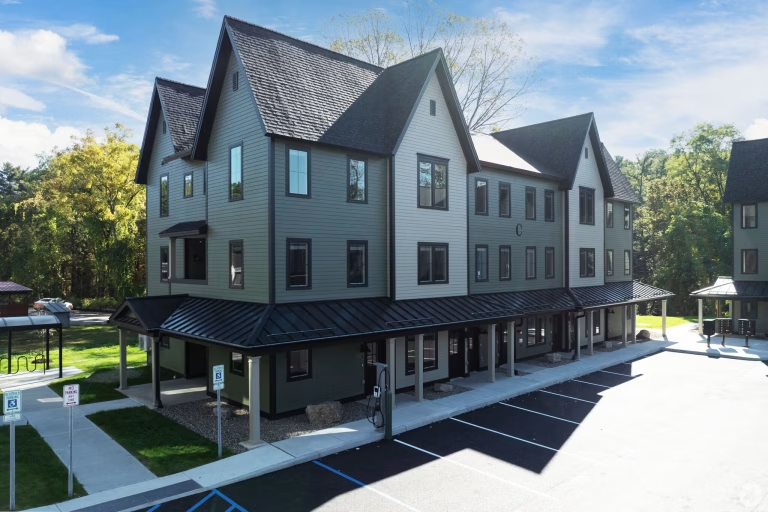
HUD 223(f) Refinance: How The Ridge Apartments Is Moving From Construction to Permanent Financing

As I mentioned in our monthly presentation, our sister company—Ascend Real Estate Advisors LLC—is shopping the refinance for The Ridge Apartments. Here’s a closer look at how that process works: shopping lenders, underwriting the new loan, and closing—the part investors care about most.

From Construction Debt to Permanent Financing

Once a property is built, leased up, and generating stable cash flow, the smart move is to replace construction debt with permanent financing built for the long haul—typically offering lower rates, longer terms, and structures better suited to an operating asset. The Ridge has reached that milestone. Leasing has stabilized, operations are running smoothly, and the property is now well-positioned for this next phase of its capital structure. Not all lenders are created equal, which is why we lean on Ascend’s expertise to find the right multifamily lending partner.

Agency vs. Conventional Bank Financing: Weighing the Options

There are two long-term financing products that fit The Ridge: agency debt and conventional bank debt. We like agency debt for its non-recourse structure and conventional debt for the flexibility of its terms.

Agency financing, offered through Fannie Mae or Freddie Mac programs, is the traditional go-to for multifamily permanent loans. It’s known for competitive pricing and, notably, non-recourse terms—meaning the loan is secured by the property itself rather than backed by personal guarantees from the sponsors.

Conventional bank financing offers more flexibility and a faster, more relationship-driven process, but banks have historically required some form of recourse or personal guarantee as part of the deal.

Why We Chose HUD’s 223(f) Program for The Ridge’s Refinance

After weighing agency and conventional bank debt, we landed on HUD’s 223(f) loan program as the best fit for The Ridge. HUD offers a fully amortizing 35-year term and up to 80% loan-to-value (LTV)—compared to our other quotes, which topped out around a 5–10 year term, 30-year amortization, and 75% LTV.

Here’s why that matters: a longer, fully amortizing term locks in today’s financing for decades rather than forcing a refinance every 5–10 years, while higher leverage returns more capital to investors at closing. HUD 223(f) is a non-recourse, government-backed structure that trades a longer approval process for materially better long-term economics on The Ridge. It’s the ideal debt product for a long-term hold, and it’s also assumable—an attractive feature if we ever looked to sell.

What This Multifamily Refinance Means Going Forward

Refinancing out of construction debt is a milestone worth marking. It signals that a project has moved past its highest-risk phase and into stable, income-producing operation. For The Ridge, it also means a more efficient capital structure: lower carrying costs, a longer runway before the next refinancing decision, and reduced risk exposure for our sponsors and investors alike.

We’ll share updates as the transaction moves toward closing. In the meantime, this is a good moment to recognize the work that got The Ridge here: a well-executed lease-up, disciplined operations, and a lending relationship that gives us leverage to negotiate terms most sponsors don’t get to see.

Huge thanks to CG Construction for the exceptional work up until now—the team is already busy in Valatie at our next project.

More to come as we approach closing in Q3.


Frequently Asked Questions

What is a HUD 223(f) loan? HUD’s 223(f) program is a government-backed, non-recourse permanent financing option for stabilized multifamily properties, offering fully amortizing terms up to 35 years and loan-to-value up to 80%.

How is HUD 223(f) different from agency financing? Both HUD 223(f) and agency loans (Fannie Mae/Freddie Mac) are non-recourse, but HUD 223(f) typically offers longer amortization and higher leverage in exchange for a longer approval timeline.

Is a HUD 223(f) loan assumable? Yes. HUD 223(f) loans are assumable, which can be an advantage for sponsors who may want to sell the property in the future without disrupting existing debt.

Around the Capital – July 14th 2026

Hi y’all,

I’m starting a newsletter series with a different focus: highlighting the recent investments shaping the area we call home. In our lane, we see plenty of private and government dollars flowing into development—all in response to the continued growth across the Empire State. By giving you a glimpse into the market and compiling some of these stories, I hope to explain our thesis and why we believe in the Capital Region.


The Capital Region’s commercial real estate market has kept a steady pace through 2026: several new developments announced, trading activity returning to normal levels, and five-plus master-planned projects breaking ground this year. Developers are racing to keep up with anticipated housing demand.


Regeneron Pharmaceuticals announced a $2B expansion into Saratoga Springs after acquiring the former Quad Graphics HQ in 2024. IBM and GlobalFoundries have announced over $5B in combined investments as well. Thousands of jobs are being created, with one problem: not enough housing supply. That’s where we come in. Our team has ramped up acquisitions efforts as we look to add an additional 100 units to the portfolio before the end of 2026!

We finally closed on Blue Spruce Inn & Suites, but we’ve been quiet about our next project—news to come soon!

-Jake

Collapsible

Green Springs Companies Closes on the former Blue Spruce Inn & Suites
We finally closed on what will soon be Orchard View Apartments. The 10-acre property in Columbia County has operated as …
Greg and Brian Green

Why “Skin in the Game” Matters When Choosing an Investment Partner

Why “Skin in the Game” Matters When Choosing an Investment Partner

Before you invest alongside a sponsor, it’s worth asking a simple question: is their own money in this deal, or just yours? It’s a useful way to separate a disciplined operator from someone who is simply good at raising capital.

We Didn’t Start as a Private Equity Firm

Green Springs began more like a traditional family office. My brother & I invested our own capital in deals around the area. That distinction has shaped how we underwrite and operate deals since.

A family office isn’t deploying a fund against a return target. It’s taking down deals with its own capital and living with the results directly. There’s no fee structure that pays out regardless of performance. If a deal underperforms, that cost falls on the same capital that made the decision.

For years, that was our model. We used our own capital to acquire and operate the same type of real estate we still pursue today, with no outside investors involved.

Why We Brought in Outside Capital

In 2023, we began taking on outside capital. The reason was straightforward: it let us compete for larger deals than we could take down using our own balance sheet alone.

Bringing in partners didn’t change our underwriting standards. It gave us more capital to apply the same standards to.

What Operating With Your Own Money Teaches You

There’s a difference between a sponsor who started underwriting with someone else’s capital from day one, and one who spent years underwriting with their own. The latter tends to be more conservative with assumptions and margin for error, simply because they bear the downside directly if the underwriting is wrong.

That discipline was in place before we ever raised outside capital, and it hasn’t changed since.

Competing With Institutional Capital

Institutional buyers are active in the same deals we pursue today, often with more resources and cheaper capital. Competing well requires being well-capitalized and disciplined in underwriting.

What we bring to that competition is the same approach we developed when it was our own capital at risk, now supported by the capital our partners contribute. That discipline predates the current scale of the business and continues to guide how we evaluate every deal.

Why This Should Matter to You

When evaluating a sponsor, it’s worth asking not just about track record or deal size, but about how they got their start, and whether they have their own capital in the deals they’re asking you to join.

Green Springs built its underwriting discipline using its own capital before taking on outside partners. That remains the foundation of how we operate.

-Brian

Founder

brian@greenspringsco.com

Self-Directed IRA: Partner with Developers By Tapping Into Your Retirement

Your Retirement Account Could Fund Your Next Deal — Without Touching Your Savings

If you’re already investing with us—or are keeping in the loop with us—you know why we like real, income-producing real estate. But here’s something I find most investors don’t know until I bring it up myself: there’s a way to get into our next deal without pulling a dollar from your checking account or your savings.

It’s called a self-directed IRA. I’d bet it’s sitting on your list of “things I should look into eventually” — so let’s actually look into it.

Your Retirement Money Is More Flexible Than You Think

Here’s the thing that surprises people every time I explain it: the IRS doesn’t limit your IRA to stocks, bonds, and mutual funds. That’s just how your brokerage set things up, because that’s the business they’re in. Nothing in the tax code says your retirement dollars have to stay parked in the market.

A self-directed IRA lets you take that same retirement money — the kind that’s been quietly riding out every market swing for years — and point it toward something else entirely: real estate.

So if you’ve ever watched your 401(k) or IRA balance dip and thought, “I’d rather have this in something I can actually see and touch,” this is how you do that. You’re not adding new money. You’re redirecting money you already have.

Why Our Upcoming Deal is Perfect for this Strategy

You already understand how our deals work, so I won’t belabor it: we pool capital from partners like yourself to acquire and restore a historic property — the kind of building that can’t be built again at today’s construction costs, and one that often carries incentives like grants and tax credits that reduce the cost basis for our partners. We handle the rehab, operations, & compliance. You stay hands-off — you do your homework up front, then let it play out.

Here’s what most people don’t realize: your IRA can be one of those investors, right alongside your personal capital. The money just comes from a different account. Any returns flow back into the IRA, tax-advantaged, same as they always were — just growing in a building with real downside protection instead of the market.

It’s Genuinely Easier Than It Sounds

I get why “self-directed IRA” sounds like a headache. It isn’t, really. You open a self-directed IRA with a custodian who specializes in this, roll funds over from an existing retirement account, and then direct that account to invest in our deal. The custodian handles the compliance and paperwork — you’re not the one filing anything unusual with the IRS. You just make the decision and sign where they tell you to.

If you’ve liked what we do so far and have been wondering how to put your retirement dollars to work here, this is that door.

Let’s Talk Before This Fills Up

I can’t share every detail on the upcoming deal yet, but I can tell you this: if you want to fund your spot with a self-directed IRA, the transfer takes some lead time to set up properly. So if that’s the route you’re considering, now’s the moment to start that conversation — not after the deal opens.

Reach out and I’ll walk you through whether this makes sense for you and how to get your funds positioned before we open things up.

-Jake

Director, Capital & Investor Relations

Jake@greenspringsco.com